Claude Code vs Codex: Choosing an AI Agent for Real Work
The two leading AI coding agents differ less on capability than on how much autonomy they take. Here is what that means for teams shipping production code.

In short
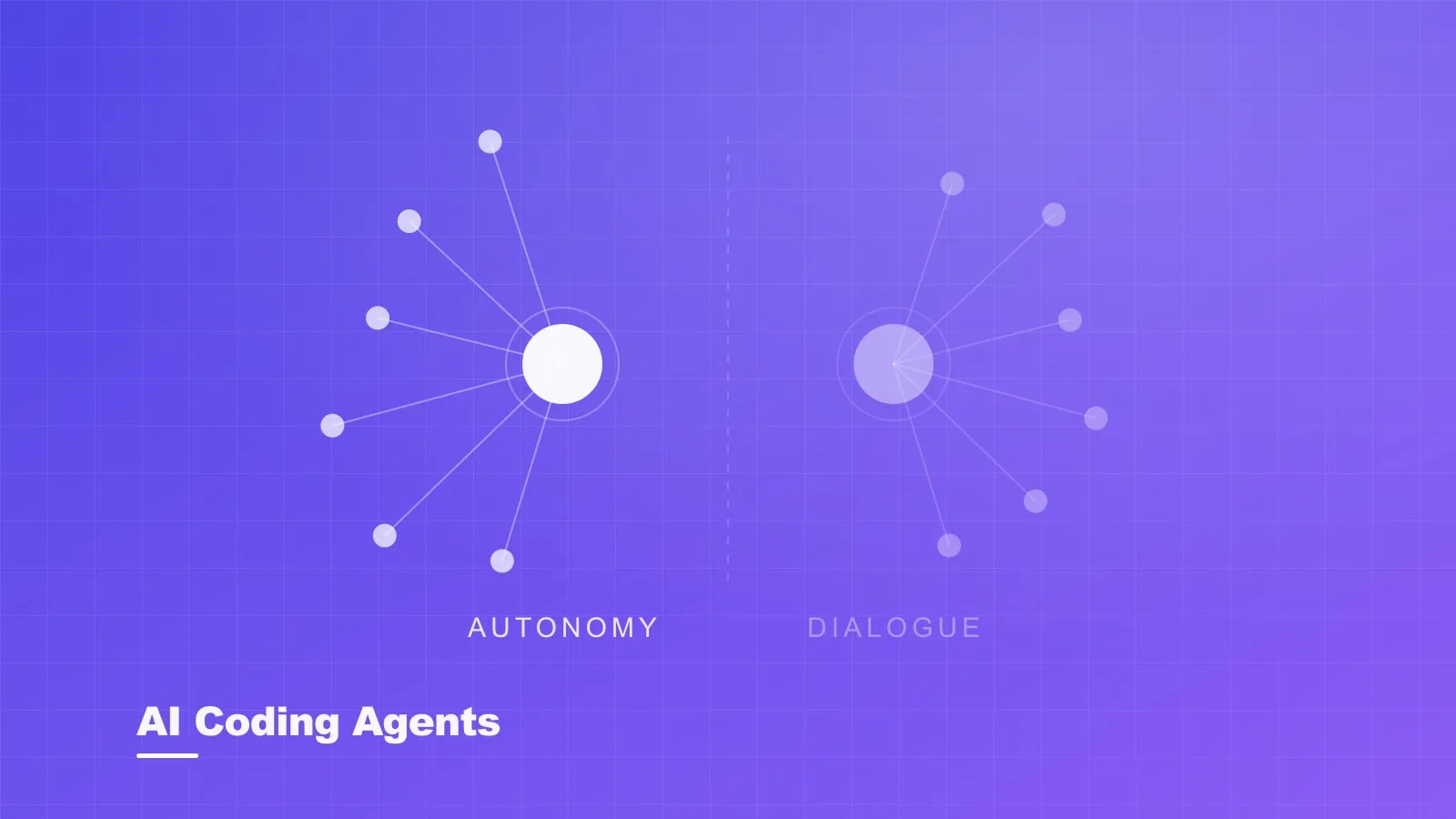
Codex is built to take a delegated task and finish it with minimal supervision. Claude Code is built to stay in dialogue, explaining decisions as it works. Reported comparisons favour Codex for throughput on well-defined tasks and Claude Code for architectural work and code quality - so the right pick depends on whether you review the output closely.
Key takeaways
- The real difference is autonomy: Codex optimises for finishing delegated work, Claude Code for staying in the loop.
- Reported benchmarks show Claude Code using substantially more tokens, partly because it reasons out loud.
- Developer preference and blind code-quality ratings diverge - teams often prefer one while rating the other higher.
- Model versions change every few months; pick on workflow fit, which changes far more slowly.
Most comparisons of AI coding agents benchmark them on task completion and declare a winner. That is the least useful thing you can measure, because the tools are not really competing on capability. They are competing on a design philosophy about how much you should be involved.
Getting that choice right matters more than a few points of benchmark difference.
The actual difference
Codex is built to take work off your plate. You describe an objective, it attempts to complete it, and it optimises for getting to done with minimal intervention. It suits work where the task is well-specified and you mainly want the result.
Claude Code is built to work alongside you. It keeps you in the decision loop, typically explaining its reasoning as it goes and breaking larger problems into components it talks through. It suits work where the approach is the hard part, not the typing.
Leanware and freeCodeCamp both land on roughly this distinction, and it holds up better than feature-by-feature comparison because it does not go stale every time a model updates.
The finding worth paying attention to
One result from a widely cited comparison is genuinely interesting: in a survey of 500+ developers, about 65% preferred Codex for daily coding - yet blind reviews of the resulting code rated Claude Code’s output as cleaner and better structured.
Preference and quality pointing in opposite directions is not a contradiction. It tells you what developers optimise for in the moment: friction. An agent that finishes without asking questions feels better to use, regardless of what it produced.
The practical implication depends entirely on your review culture. If code gets read carefully before merge, the difference in output quality is caught either way and the faster tool wins. If AI output is merged with light review - which is increasingly common - then the tool producing more idiomatic code by default is doing real work for you, and preference is the wrong thing to select on.
Token use and what it means
Reported benchmarks show Claude Code consuming substantially more tokens on identical tasks - roughly 4x in one comparison. That sounds damning until you look at where the tokens go: reasoning out loud, clarifying ambiguity, explaining trade-offs.
That is either overhead or the product, depending on the task.
For a well-specified change to code you know well, it is overhead. For architectural work in an unfamiliar codebase, the explanation is a substantial part of the value - you are getting a reviewable line of reasoning, not just a diff.
Worth keeping in proportion: at current pricing, the cost difference between these tools is small relative to the developer time either one saves. Optimising tool choice for token cost is usually a rounding error dressed up as diligence.
Where each tends to win
Based on reported comparisons and consistent developer commentary:
| Work type | Tends to favour |
|---|---|
| Well-specified, bounded tasks | Codex - autonomy pays off |
| Large refactors with clear intent | Codex |
| Architecture and design decisions | Claude Code - reasoning is the output |
| Unfamiliar codebases | Claude Code |
| Frontend and UI work | Claude Code, commonly attributed to its tooling ecosystem |
| Throughput under deadline | Codex |
Treat this as directional. These are aggregate tendencies from public comparisons, not laws, and the honest answer for any specific team is to run both on a real piece of your own work for a week.
What does not change when models update
Model versions move every few months. Anything you decide based on current benchmark numbers has a short shelf life, which is a good argument for deciding on things that move slowly.
Your review process. If AI-written code is merged without close review, you need the tool with the better default output and stronger architectural instincts. This matters more than any benchmark.
Your codebase’s legibility. Both tools perform dramatically better in codebases with clear structure, real tests and documented conventions. Teams frustrated with AI agents frequently have a codebase problem the agent is merely revealing.
Your task shape. Teams doing mostly well-defined feature work get more from autonomy. Teams doing mostly novel or architectural work get more from dialogue.
Security posture. AI-generated code has been reported to carry elevated vulnerability rates. Whichever tool you choose, that argues for dependency scanning and security review as standard rather than optional - particularly for anything handling authentication, payments or personal data.
The thing most teams get wrong
The choice between these tools is a smaller decision than whether your engineering process can absorb AI-generated code safely.
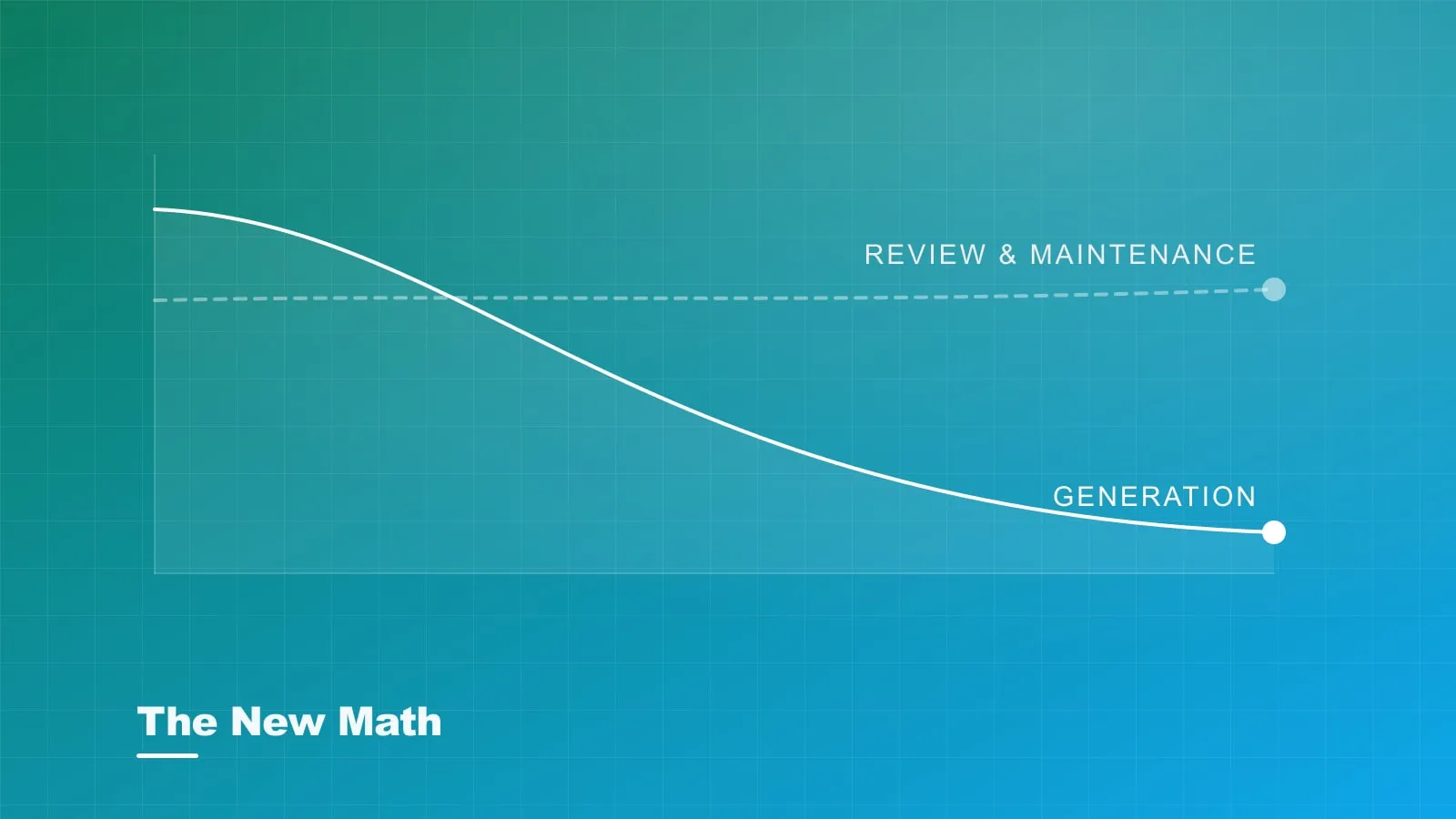
An agent that produces a week of work in an afternoon does not help a team whose bottleneck is code review, QA capacity or deployment confidence. It moves the queue. Several teams have discovered that their velocity did not improve much after adopting AI agents, because generation was never the constraint.
That is the same reason AI has changed the build-versus-buy calculation less than the headlines suggest - it compresses the part that was already cheap.
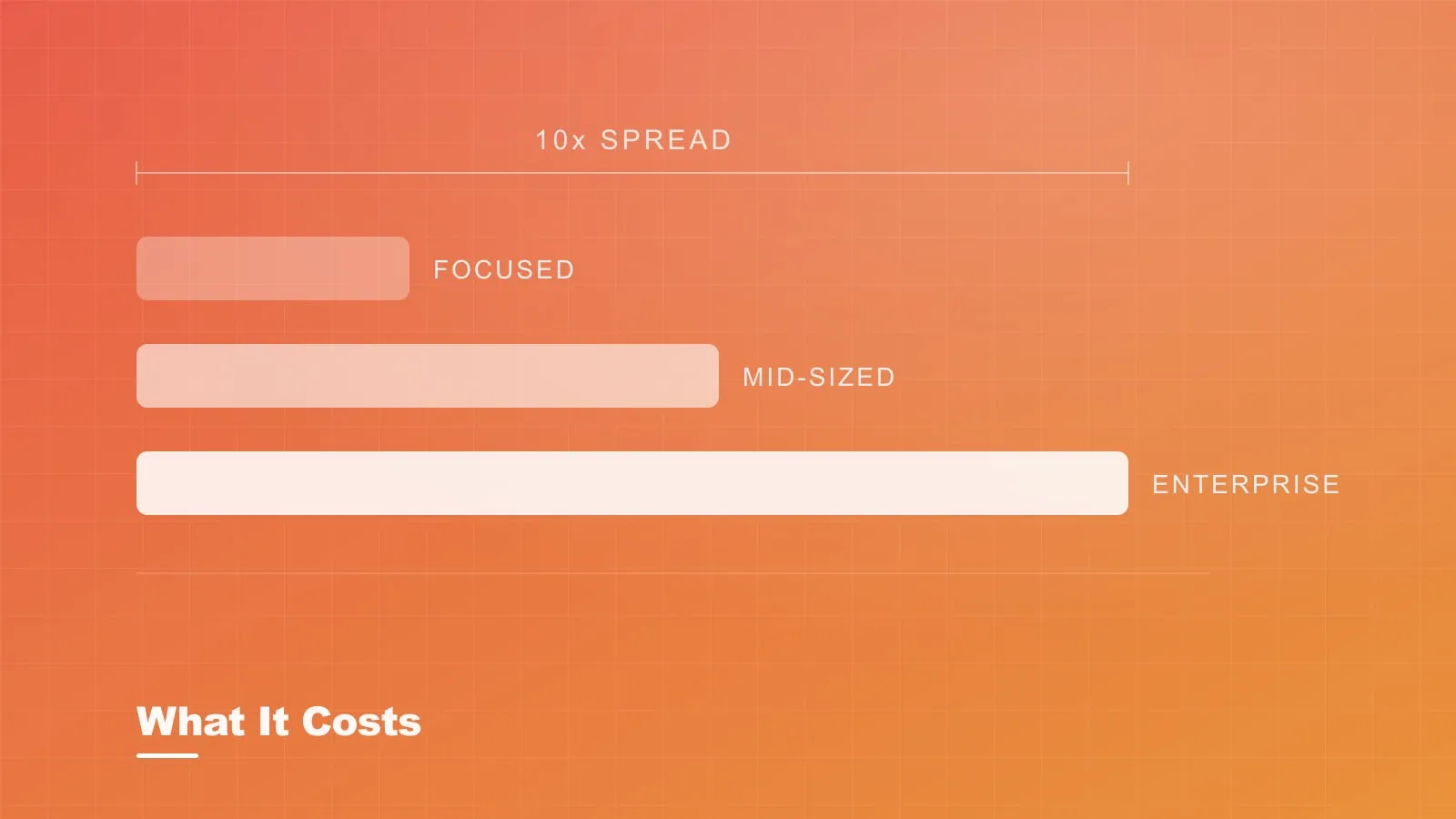
If you are commissioning work rather than writing it, the relevant question is different again: whether your vendor uses these tools well, and whether their review process is strong enough that it matters. That belongs in the same conversation as what the build actually costs.
A practical recommendation
Use both. They are inexpensive relative to salaries, and the tasks genuinely differ.
This also matters when you are commissioning work rather than doing it. A vendor’s tooling choice is far less informative than their review process - and if you are comparing development quotes, how a team handles AI-assisted code review tells you more about delivery risk than which agent they license.
Route well-specified work to the more autonomous agent and architectural or unfamiliar work to the more collaborative one. Standardise the things that actually need standardising - configuration, review policy, what may be merged without human reading - and let individuals pick their tool.
Then revisit in six months, because everything specific in this article will have changed and the framework will not have.
FAQ
Frequently asked questions
What is the main difference between Claude Code and Codex?
The core difference is how much autonomy each takes. Codex is designed to execute delegated work efficiently, so you describe an objective and it attempts to complete it with minimal intervention. Claude Code keeps the developer closely involved, typically explaining its reasoning alongside implementation. Neither approach is universally better, but they suit different review cultures.
Which AI coding assistant produces better code quality?
Reported comparisons are mixed and worth reading carefully. In one widely cited developer survey, a majority preferred Codex for daily coding, yet blind reviews of the output rated Claude Code as cleaner and more idiomatic. That divergence suggests preference is driven substantially by speed and workflow feel rather than by the code itself.
Does Claude Code use more tokens than Codex?
Reported benchmarks indicate it uses considerably more on identical tasks, in one comparison roughly four times as many. Much of that comes from the design difference: Claude Code reasons out loud, asks clarifying questions and explains its work. Whether that is waste or value depends on whether you read the reasoning.
Should our team standardise on one AI coding agent?
Not necessarily. These tools are cheap relative to developer time, and many teams use both for different work - a more autonomous agent for well-specified tasks and a more collaborative one for architecture and unfamiliar code. Standardising matters more for shared configuration and review policy than for the tool itself.

Written by
Jeevan Kumar
Founder, FlowLaunch
Jeevan has spent nine years building and scaling digital businesses, most recently taking a services company from zero to seven figures without outside funding. He writes about the systems underneath growth, not the tactics on top of it.
- 9 years operating
- Bootstrapped to 7 figures
- 40+ growth engagements